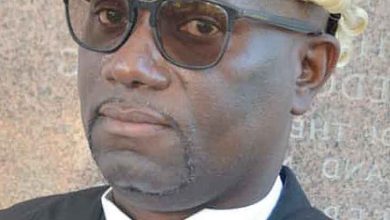
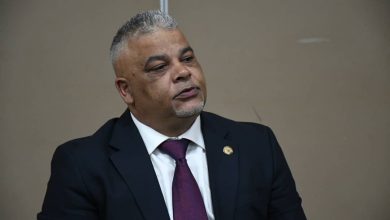
Four of the five police commissioners who last year obtained an injunction against their redeployments have been moved into non‑active, supernumerary roles, Nation on Sunday can reveal.
The affected officers— Christopher Katani, Rhoda Manjolo, Emmanuel Soko and Chikondi Chingadza —received redeployment letters dated 3 February 2026, placing them in positions with no specific operational duties.

An insider at the Malawi Police Service said supernumerary postings are normally reserved for officers who are incapacitated, ill or otherwise without substantive assignments.
National Police, however, defended the moves, saying they were driven by operational requirements.
One commissioner, Barbra Mchenga Tsiga, is not on the list; sources say she had requested reassignment to the Ministry of Justice and Constitutional Affairs before the latest redeployments.
The four embattled commissioners received their letters during the week, all dated February 3 2026 which state that the redeployments are due to the exigencies of duty and operational requirements of the Malawi Police Service.
According to our findings, official vehicles of the four commissioners have since been withdrawn from them pending new transport arrangements and that this has already been communicated to them.
Following the redeployments, Soko has been moved to Police Training School at Kanjedza in Limbe, Manjolo will remain at Central Eastern Region Headquarters while Katani and Chingadza will transfer to Police Training College in Zomba.
Sources within the Malawi Police Service told us during the week that the embattled commissioners’ vehicles have been distributed to the eight commissioners who were promoted on January 31 2026.
We could, however, not verify the claims, but the newly-promoted commissioners include Evalista Chisale, Jane Mandala, Frank Kumukumu, Delvin Mwamkili, Kelvin Mulezo, Mabvuto M’bobo, Lovemore Mwabumba and Glinton Mitayi.
Prior to their promotions, the eight were serving as Deputy Commissioners of Police.
According to our sources, the embattled commissioners will now be reporting to some of the newly-promoted commissioners.
Redeployments of the four commissioners come at a time the High Court of Malawi is yet to make its determination on the matter.
They also come at a time when the Attorney General (AG)’s office has filed an application in the Malawi Supreme Court of Appeal seeking a discharge of the injunction obtained by the five commissioners.
In his application filed in the Malawi Supreme Court of Appeal, AG Frank Mbeta wants the injunction granted by the High Court on November 28 2025 set aside on the basis of protecting the public interest pending a final determination of the matter.
And in his affidavit in support of the application, Chief Secretary to the President and Cabinet Justin Saidi argues that the Malawi Police Service being one of the most key security institutions in the country, there is a need to put in place officers that have complete trust of the government.
He further argues that the status quo has purportedly created an air of untrustworthiness which may result in chaos in the service.
“The order of injunction that was granted by the court below has caused the applicant [Chief Secretary] to suffer prejudice in that, the applicant being the head of the public service, has, by the said court orders, been restrained from carrying out his mandate,” reads Saidi’s affidavit.
“Consequently, this has affected the management and administration of public service delivery to the extent that the respondents [Commissioners] are back in office on the sanction of the injunction as ordered by the court.
“Considering that the respondents are very senior officers, this has created a very tense environment in the offices; hence, the inconvenience. I believe that in the foregoing prejudice coupled with the potentially resultant chaos in the Malawi Police Service cannot be compensated with damages.”
The submissions will be heard before the Malawi Supreme Court of Appeal on February 18 2026 at 9am, according to a notice we have seen.
Ironically, the Supreme Court will convene a week prior to a scheduled hearing of the matter at the High Court of Malawi’s Civil Division in Lilongwe on February 27 2026, according to a notice we have seen.
National Police spokesperson Lael Chimtembo yesterday said: “Their redeployment has been necessitated by work exigencies and is unrelated to any court order.”
When contacted on his known mobile phone, lawyer representing the four commissioners Khumbo Soko was not available.
But reacting to the developments, National Advocacy Platform chairperson Benedicto Kondowe yesterday said the redeployments raise grave rule of law concerns.
“Redeploying the officers into diminished roles within the police service and withdrawing rank-linked privileges while litigation is active risks being viewed as constructive defiance of a court order,” said Kondowe.
“Administrative action that neutralises the effect of judicial protection, without openly breaching undermines the authority of the courts and offends basic principles of legality and good faith.”
Kondowe said that in practice, redeployments in disciplined services must be lawful, non-punitive and procedurally fair. He said any action that appears retaliatory or designed to pressure officers for asserting their legal rights erodes discipline, morale and public trust in command structures.
He said: “If these measures were intended to sidestep the injunction, the courts are fully empowered to step in decisively to protect judicial authority, enforce separation of powers and reaffirm that Executive discretion is never above the law.”
Human Rights Defenders Coalition chairperson Michael Kaiyatsa in a separate interview described the scenario as deeply troubling.
He said: “Where a court has issued an injunction restraining specific actions by the Executive, compliance is not optional, therefore, redeploying the affected Commissioners to lesser positions within the service and withdrawing their privileges while legal proceedings are ongoing amounts to punitive and retaliatory conduct.”
Kaiyatsa said such actions undermine the professionalism and independence of the police service.
He said in a constitutional democracy, disputes of such nature must be resolved strictly through lawful processes, with full respect for judicial authority and the rights of those affected.
“Failure to do so sets a dangerous precedent and weakens the rule of law,” he said.